
Pipestone County Criminal Court Records
A criminal court record is the District Court case file, not just the arrest or booking entry. In Pipestone County, criminal files are processed through Pipestone County District Court and Court Administration. The file can begin with a complaint or citation, then grow as hearings, pleas, motions, bail conditions, trial settings, verdicts, dispositions, sentencing terms, restitution, fines, and probation entries are added. The Pipestone County arrest records and court charges page is the better place for the arrest-to-charge path. Criminal court records focus on the full court case and outcome.
Minnesota's trial court structure is unified. Pipestone County District Court hears felony, gross misdemeanor, misdemeanor, traffic-criminal, juvenile, and other criminal matters filed in the county. The county attorney prosecutes adult felonies and gross misdemeanors in the county, plus misdemeanor and traffic violations outside city limits, while public defense is handled through the Minnesota Board of Public Defense appointment system.
The Pipestone County Attorney page identifies the local prosecution office tied to criminal filings.
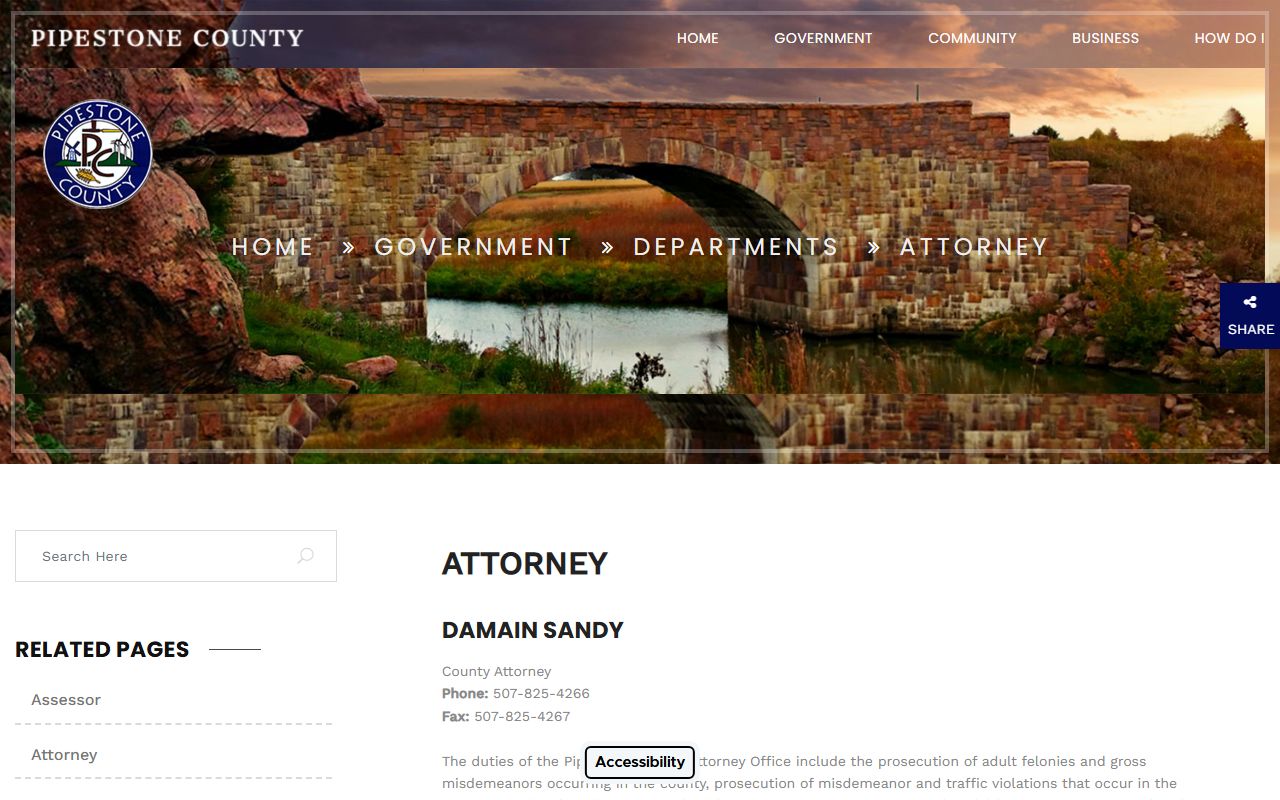
The County Attorney source is important because it identifies who prosecutes the charges that become criminal court case records.
Search Pipestone County Criminal Court Records
Use Minnesota Court Records Online Case Search for public criminal case details from Pipestone County District Court. MCRO allows searches by name, case number, citation number, and attorney. The pending-criminal limit is key. The MCRO FAQ says pending criminal cases cannot be searched by defendant name until there is a conviction. If a case is pending, search by case number, citation number, attorney name, or attorney bar number when available.
- Open MCRO Case Search and accept the terms.
- Select Case Number or Citation Number for pending criminal matters when a name search is blocked.
- Use the Name tab for conviction-level or otherwise searchable public criminal cases.
- Filter by criminal case category and Pipestone County court location.
- Open the case and review the Register of Actions, hearings, charge rows, plea entries, disposition, and documents.
- Request certified copies from Pipestone County Court Administration when an official record is needed.
The Minnesota BCA Public Criminal History Search is a separate official system for public conviction history. It is not the same as MCRO. BCA criminal history does not show every arrest, pending charge, or dismissed count. It can help confirm conviction-level history, while MCRO gives the District Court case view.
Pipestone County Criminal Case Flow
Criminal court records grow as the case moves through court. The first visible court events may include a complaint, citation, bail hearing, arraignment, or first appearance. Later entries can include pretrial hearings, motions, plea negotiations, trial settings, verdicts, sentencing, probation, restitution, and fines. Not all cases go through a trial. Many end with a plea, dismissal, amended charge, or sentence after a negotiated resolution.
Case flow: Charges Filed › Arraignment › Pretrial / Motions › Plea or Trial › Disposition › Sentencing
| Stage | What Happens |
|---|---|
| Charges Filed | The complaint, citation, or other charging document opens the criminal case record. |
| Arraignment | The defendant is advised of the charge and enters or prepares to enter a plea. |
| Pretrial / Motions | The parties litigate evidence, scheduling, settlement, bail, and other case issues. |
| Plea or Trial | The case resolves by plea, court trial, jury trial, acquittal, or dismissal. |
| Disposition | The court records the outcome for the case or each charge. |
| Sentencing | The court enters jail, probation, fines, fees, restitution, treatment, or other conditions after conviction. |
Pipestone County Corrections and Probation may become part of the record after conviction or as part of pre-sentence work. The Corrections and Probation page documents local supervision and investigation duties.
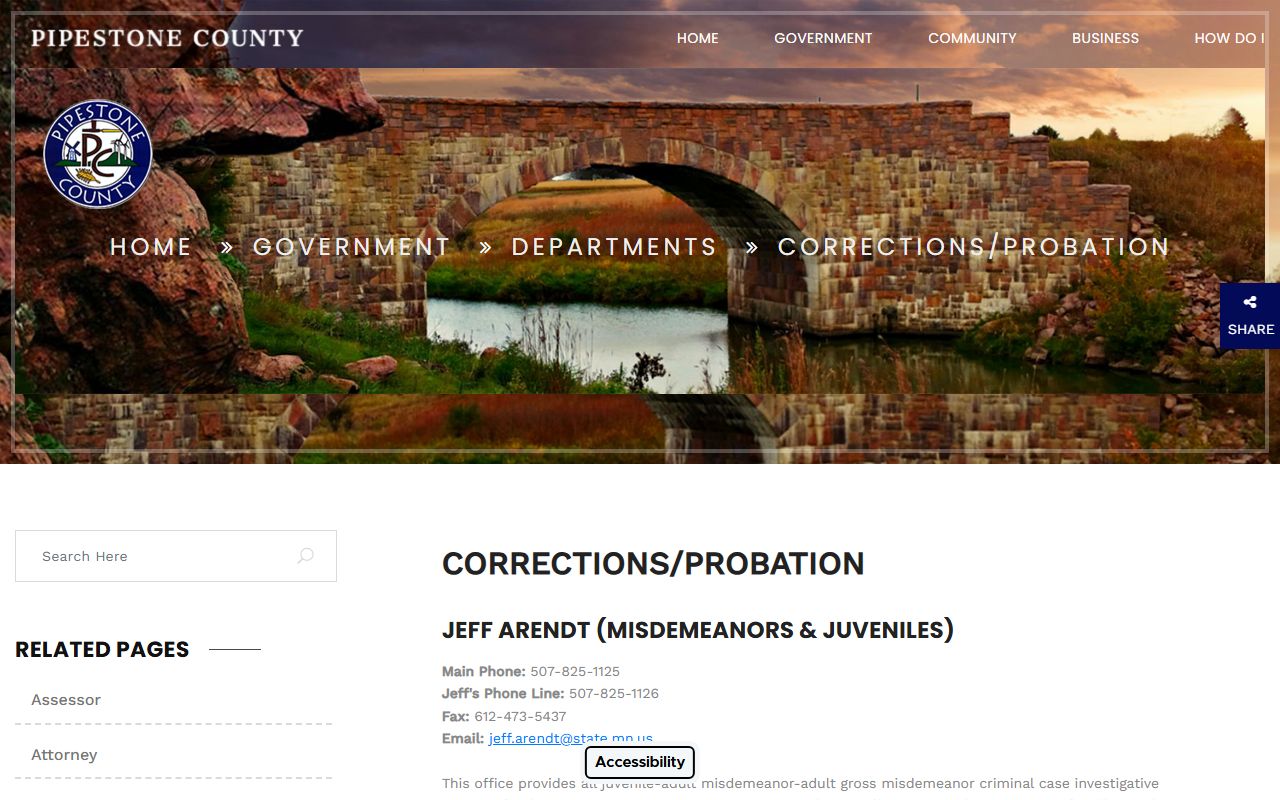
That source documents misdemeanor, juvenile, gross misdemeanor, felony probation, investigation, and supervised-release functions tied to local court cases.
What Pipestone County Criminal Records Show
A public criminal court record may show less online than the courthouse file contains. MCRO can show public case details, hearing information, Register of Actions entries, and public documents when remote access is allowed. Older files, confidential materials, non-remote documents, and certified copies require Court Administration.
| Field | What It Shows |
|---|---|
| Case Number | The court file number, often beginning with Pipestone County code 59 and a CR or VB-style case type. |
| Defendant | The person charged in the criminal or traffic-criminal case. |
| Charges | Statute, offense level, description, count status, plea, and disposition when public. |
| Hearings | Arraignment, bail hearing, pretrial, probation violation, trial, sentencing, and related court dates. |
| Plea | The defendant's response to a charge, such as guilty, not guilty, or other allowed plea entry. |
| Disposition | The outcome of the charge or case, including conviction, dismissal, acquittal, or amended result. |
| Sentence | Jail, probation, fines, fees, restitution, treatment, or other court-ordered conditions after conviction. |
| Documents | Public PDFs if remotely available; certified versions must come from Court Administration. |
Pipestone County Charges vs Convictions
A charge is an accusation filed in court. A conviction is a guilty outcome by plea, verdict, or other final finding allowed by law. Criminal court records can show charges that were reduced, amended, dismissed, or resolved without conviction. That is why the charge row, plea, disposition, and sentence must be read together.
| Charge | Conviction | |
|---|---|---|
| Stage | Filed before the final outcome. | Entered after a guilty plea, verdict, or finding. |
| Proof Level | Based on the charging process and probable cause standards. | Requires proof or admission sufficient for a guilty outcome. |
| Record Meaning | Shows what was alleged or filed. | Shows the charge that ended in a guilty result. |
| Where to Check | MCRO case details and court charge rows. | MCRO disposition, sentence, and BCA public conviction history. |
The Minnesota Board of Public Defense offices page is included as a criminal court record image source.
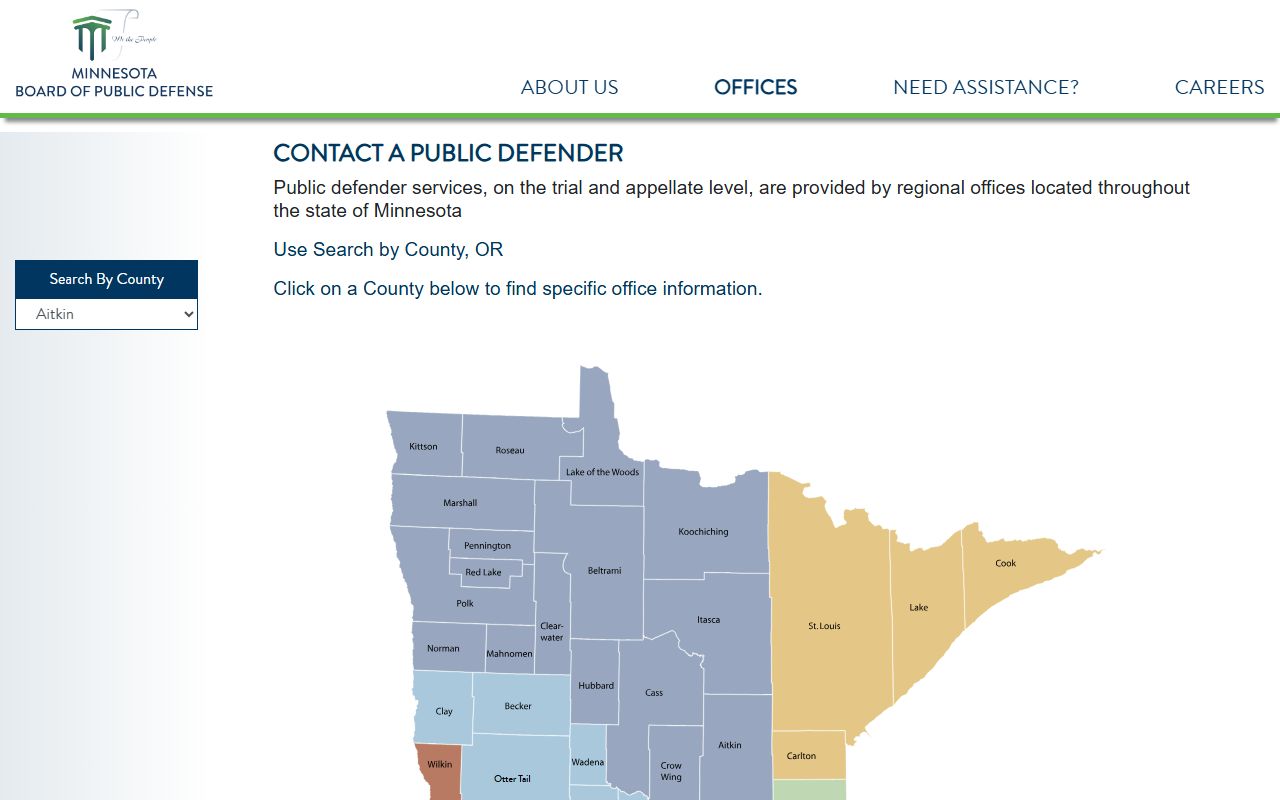
Public defense is relevant because a person facing a jail-risk charge may seek appointed counsel through the court process.
Reading Criminal Dispositions
Disposition is the court-record term for the result. In a Pipestone County criminal court record, one case can have several charges with different outcomes. One count may be dismissed, another may be amended, and a third may result in a guilty plea. The sentence belongs to the conviction or court-ordered result, so it should not be assumed from the first filed charge alone.
Probation, restitution, fines, jail, treatment court, ignition interlock, and other conditions may appear in the court record when ordered. DWI-related cases can also connect to Fifth Judicial District ignition interlock resources. Probation violation hearings may later appear on the docket if conditions are alleged to have been violated.
The Minnesota Judicial Branch public defender page explains court-appointed counsel access.
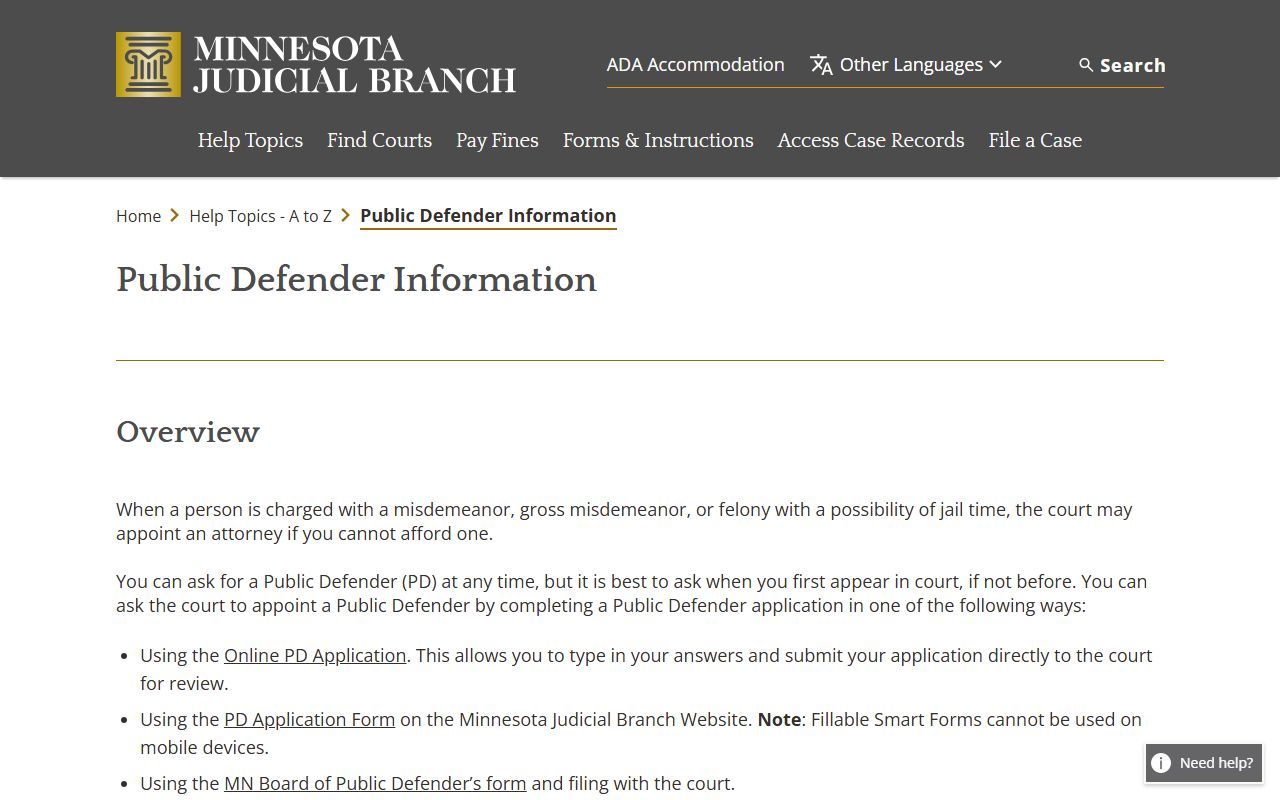
The Judicial Branch source explains that appointment is tied to eligibility, charge level, and court process, not a county attorney referral.
Sealed vs Expunged Criminal Records
Restricted criminal court records can include sealed cases, expunged cases, juvenile cases, and records limited by remote-access rules. Minnesota expungement may remove a qualifying case from public online view, but government agencies may retain access when statutes allow. A missing MCRO result should not be treated as proof that no case ever existed.
| Sealed | Expunged | |
|---|---|---|
| Public View | Hidden from public access unless law or court order allows release. | Removed or limited from public access after statutory automatic sealing or court order. |
| Government Access | May remain available to authorized agencies. | May remain available to agencies when Minnesota law permits. |
| Process | Can result from confidentiality law, court order, or case category. | May follow Minn. Stat. sections 609A.02, 609A.03, or 609A.015. |
| Local Step | Ask Court Administration about access to the specific case. | File in the district court that handled the case unless automatic expungement applies. |
Minnesota expungement eligibility law is central to criminal court record visibility.
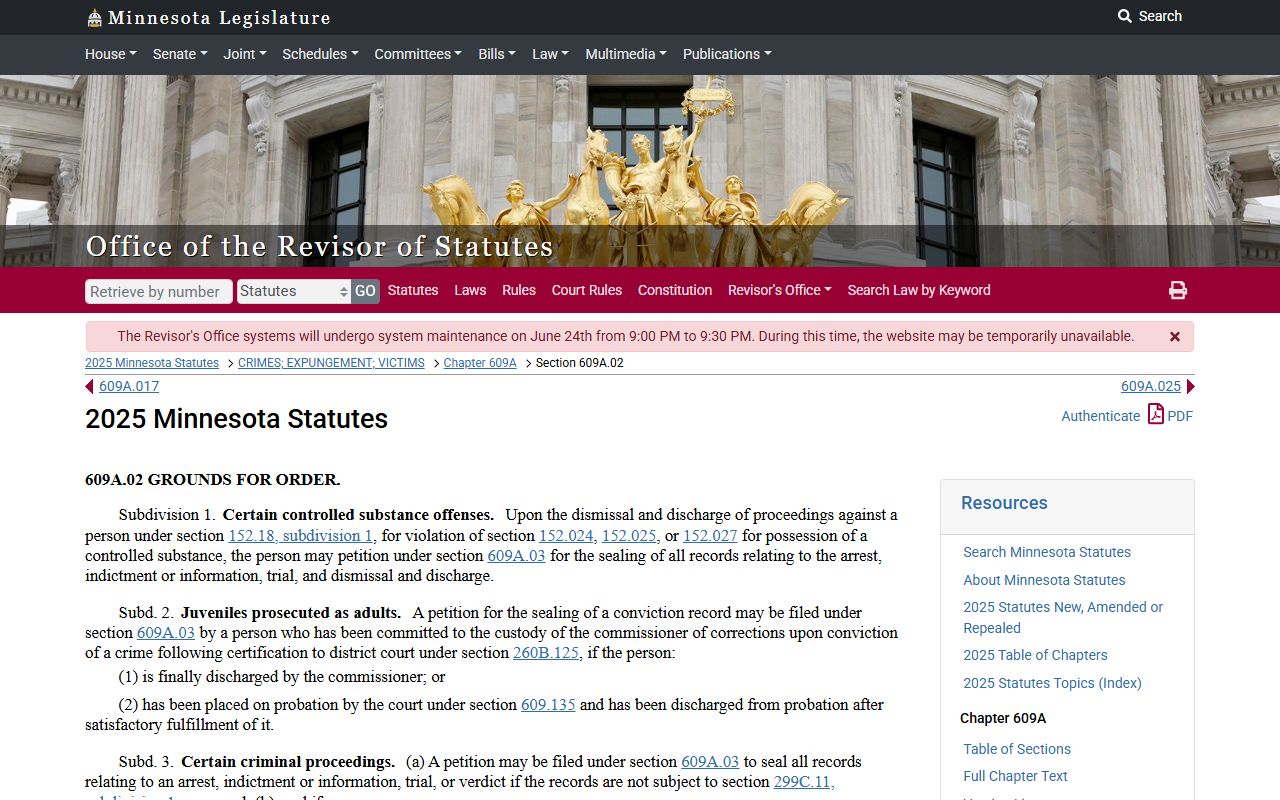
Eligibility and exclusions are statute-driven, so the court record alone may not answer whether expungement is available.
Public Access to Pipestone Criminal Records
Minn. Stat. section 13.03 makes government data public unless another law classifies it differently. Minn. Stat. section 13.87 covers public criminal history through the BCA. Court case files are also governed by Minnesota Rule of Public Access 4 and Rule 8, which explain non-public categories and remote-access limits.
Key Statutes:
Minn. Stat. section 609A.03 describes the petition procedure used for many expungement requests.
Minn. Stat. section 609A.015 provides automatic expungement for qualifying records.
The Minnesota State Law Library Pipestone County legal referrals page identifies public defender referral details for the county.
That referral page identifies the Fifth Judicial District public defender office information for Pipestone County legal referral context.
Criminal Background Check Limits
MCRO criminal court records and BCA public criminal history serve different purposes. MCRO is a case search and document access system for district court records. The BCA system is a public criminal-history search for conviction-level data. Neither should be described as a complete employment, tenant, licensing, or credit screening report. Formal consumer background checks have separate legal duties and accuracy rules.
Important: Public court lookups are not FCRA consumer reports and should be verified with the originating agency.
Restricted Pipestone Criminal Court Records
Juvenile delinquency, child-protection, sealed, expunged, domestic abuse, harassment, civil commitment, victim identity, witness identity, juror identity, financial account, Social Security number, and minor information may be withheld or redacted. Court Administration is the local access point for questions about a specific file, certified copy, or authorization to view a restricted record.
Minnesota expungement eligibility, expungement petition procedure, and automatic expungement are the core research citations for sealed or expunged criminal case visibility.