
Pipestone County Probate Overview
Probate in Pipestone County is handled by the Probate Division of District Court. The county does not have a separate probate courthouse, surrogate court, or orphans' court. Pipestone County District Court has original jurisdiction in probate matters, and Court Administration processes Family/Probate files at the courthouse.
Probate records can include formal probate of a will, informal probate filings, appointment of a personal representative, determination of descent, notices to creditors, trusts, annual and final accounts, guardianship, conservatorship, and proceedings involving a minor or incapacitated person. Property records tied to an estate may also lead to the Pipestone County Recorder after deeds, Torrens documents, or court directives are recorded.
Because probate shares the same local court office as family and civil matters, the access path is practical: search public online court data first, then use Court Administration for certified copies, paper files, or access questions. For a will or estate file, the name of the decedent and any known case number will usually be more useful than a broad date-only search.
Pipestone County Probate Division of District Court
416 S. Hiawatha
Pipestone, MN 56164
(507) 690-7004
Monday-Friday, 8:00 a.m.-4:30 p.m.
Pipestone Probate Terms
Probate filings use terms that describe the person who died, the person asking for court action, and the person appointed to act for an estate or protected person. These terms help readers interpret MCRO entries, hearing calendars, and copy-request forms.
- Testator
- A person who made a will.
- Executor
- A person named in a will to carry out estate duties, often called a personal representative in court records.
- Intestate
- Dying without a valid will, which can require a court process to determine heirs and estate authority.
- Guardianship
- A court case about personal care and decision-making for a minor or incapacitated person.
- Conservatorship
- A court case about managing money or property for a person who needs legal protection.
Search Pipestone Probate Records
Public probate searches use MCRO Case Search when remote access is allowed. Search by the name of a decedent, petitioner, respondent, protected person, attorney, or case number, then limit the court location to Pipestone County and use Probate or Mental Health categories when available.
Document Search is most effective after a case number is known. Hearing Search can help locate scheduled probate hearings, but a hearing entry is not the same as a full estate inventory, account, or order. Certified letters, appointment orders, and court-authenticated copies should be requested from Court Administration.
- Open MCRO Case Search and accept the public-access terms.
- Search by party name or case number, then select Pipestone County as the court location.
- Review the case category, parties, Register of Actions, hearings, and public documents.
- Use Document Search with the case number if public online documents are needed.
- Contact Court Administration for certified copies, older files, or restricted access questions.
The Pipestone County District Court fee schedule lists probate-related copy and trust-account fees.
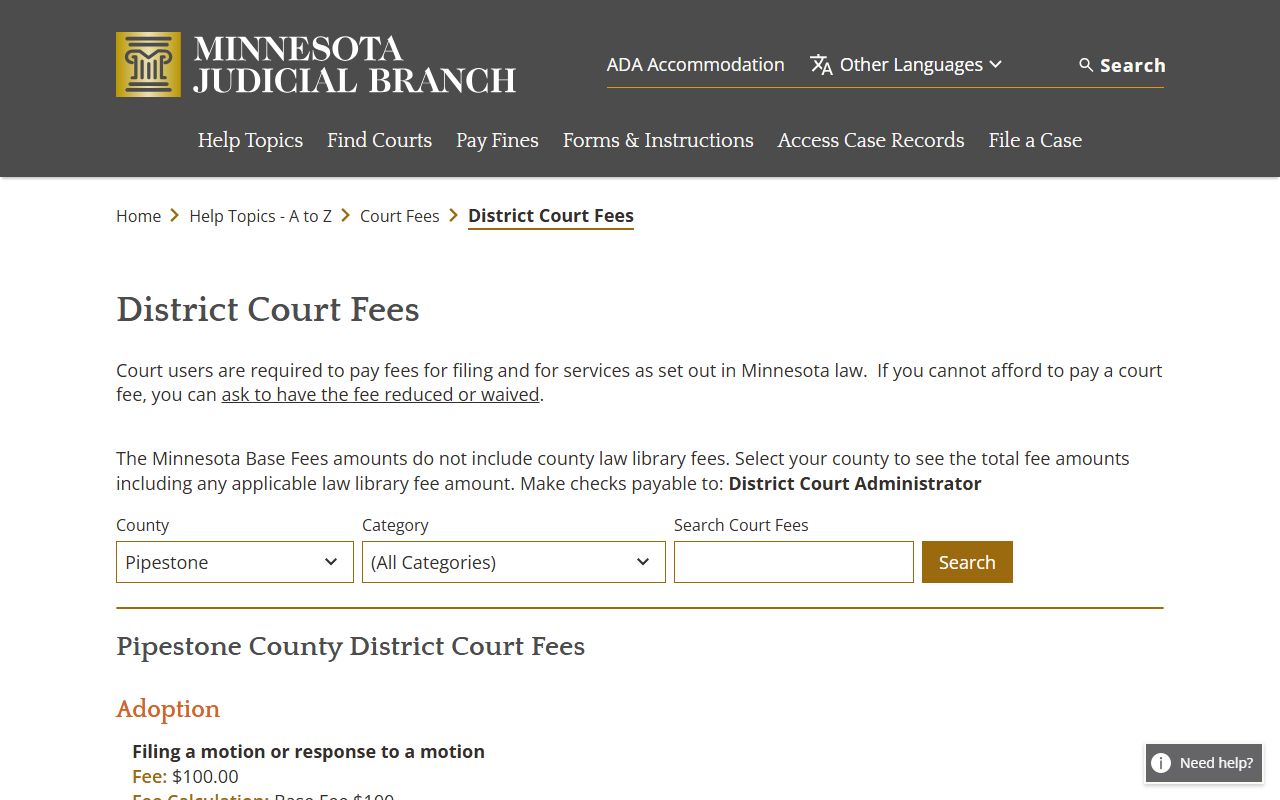
The fee schedule supports copy planning before requesting certified probate records from Court Administration.
Pipestone Probate Hearing Records
The public court calendar provides local examples of how Pipestone County probate matters appear in court data. Calendar entries may show probate hearings, account hearings, a petitioner, respondent, person subject to guardianship, person subject to conservatorship, attorney, hearing type, connection type, judicial officer, and case number.
Example case-number formats in the research include county probate-style numbers such as 59-P0 and 59-PR. Those examples should be used as patterns only. A person seeking a specific file should search MCRO or contact Court Administration rather than relying on a notice excerpt or calendar item alone.
Probate notices can identify the court as District Court, Fifth Judicial District, Probate Division. They may also show formal probate, determination of descent, or estate caption language. A notice is useful for locating a case number and filing type, but it is not the full probate record. The court file is the source for petitions, orders, letters, inventories, accounts, objections, and closing documents.
| Probate Field | What It Can Show |
|---|---|
| Case number | County and case-type code, such as probate or related mental-health category. |
| Decedent or protected person | The person whose estate, guardianship, or conservatorship is at issue. |
| Petitioner or respondent | Person asking for court action or person responding to it. |
| Hearing type | Probate hearing, account hearing, or other court event. |
| Documents | Public filings when remotely available; restricted items may require court contact. |
Pipestone Probate Filing Fees
Probate fees are listed in the Pipestone County District Court fee schedule. The research file identifies trust-account fees, copy charges, and civil first-paper filing fees that may be relevant to some probate-style filings. A case-specific filing question should be checked with Court Administration because probate filings can vary by type.
| Item | Amount | Notes |
|---|---|---|
| Trust accounts, partial, final, or annual | $55 | District Court fee schedule. |
| Civil first paper | $320 | May apply depending on filing type. |
| Certified copy | $14 | Per instrument or document. |
| Certified and exemplified copy | $28 | When both certification and exemplification are needed. |
| Plain uncertified copy | $0 | For available uncertified copies. |
Pipestone Small Estate Affidavits
Minnesota Uniform Probate Code section 524.3-1201 covers collection of personal property by affidavit when statutory conditions are met. This can be an alternative to a full probate case for qualifying smaller estates, but the current value limit, timing rules, and affidavit requirements should be checked against the statute and any current court forms.
A small-estate affidavit is not a search tool for court records. It is a legal collection method that may avoid opening a full probate file when the estate and timing fit the statute. If real estate, disputed heirs, guardianship issues, creditor disputes, or a formal appointment is involved, the District Court probate process may still be needed.
The Minnesota small estate affidavit statute is one of the main probate statutes tied to estate collection.
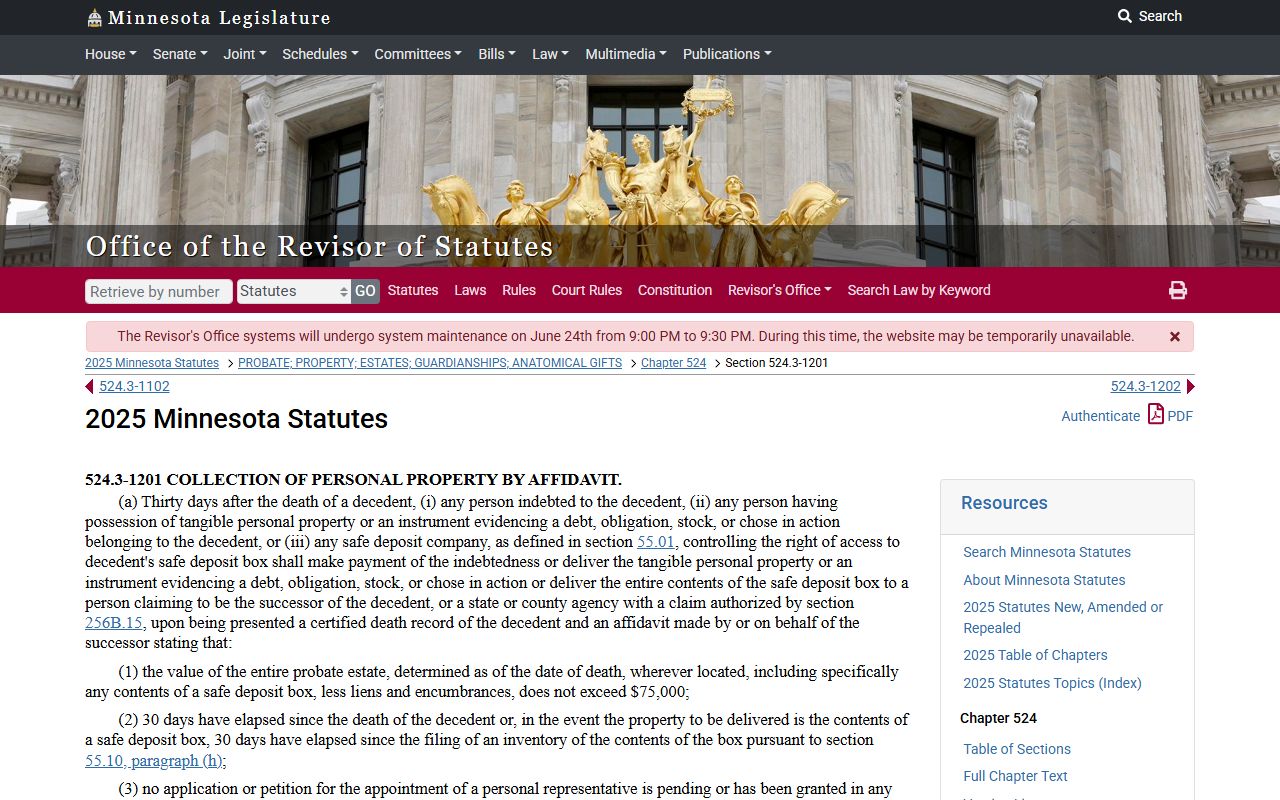
Small-estate affidavits are statutory tools, not a blanket substitute for every Pipestone County probate filing.
Restricted Pipestone Probate Records
Probate access is not uniform. Older files, wills not visible online, certified copies, guardianship documents, conservatorship reports, civil commitment materials, and sealed or confidential matters can require Court Administration review. MCRO may show basic case information while withholding documents under remote-access rules.
Minnesota Rule of Public Access 4 identifies non-public case-record categories. That rule is especially important for guardianship, conservatorship, mental-health, juvenile, and sealed record issues.
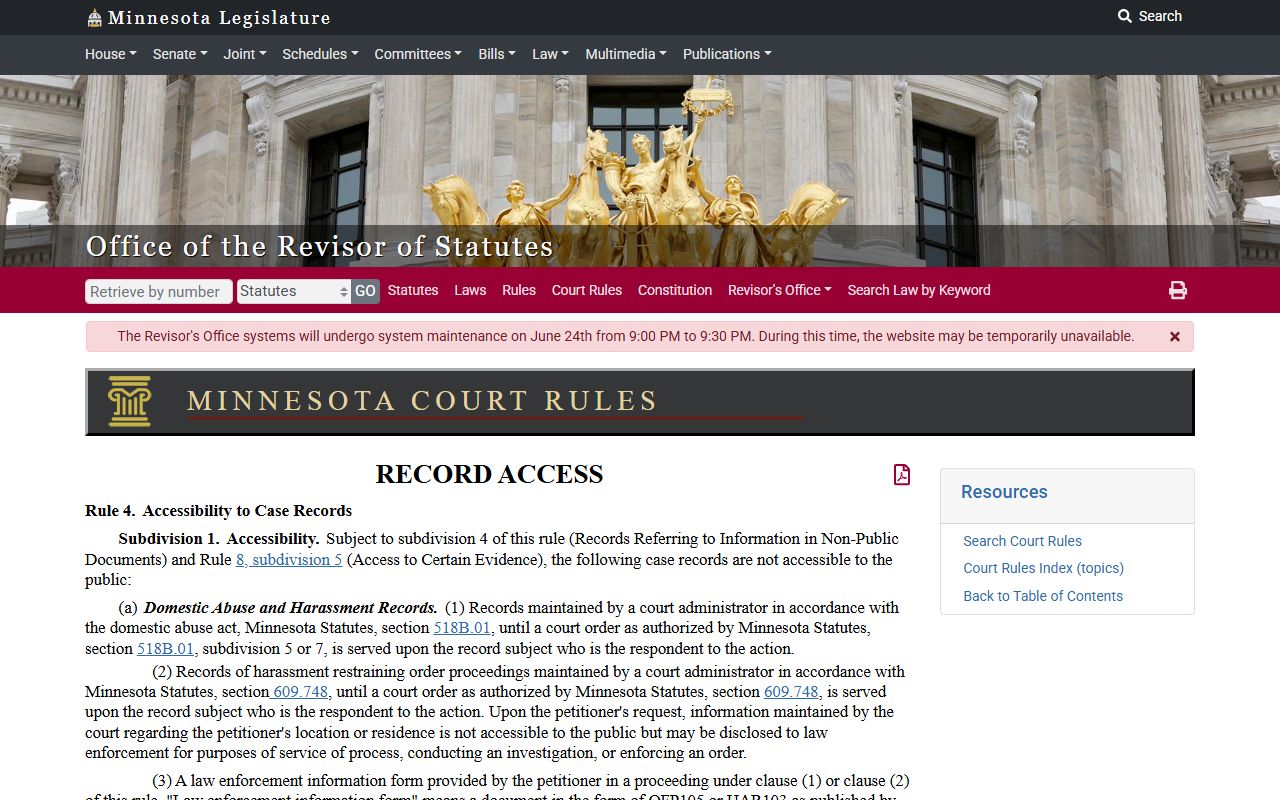
The rule explains why a missing online document does not always mean the probate record does not exist.
Guardianship and conservatorship records need special care because they can involve medical, financial, minor, or incapacitated-person information. A public case entry may confirm the existence of a matter while reports, evaluations, account details, or protected-person data remain unavailable to the general public. Authorized parties should contact Court Administration with the case number and their role in the case.
For estate property, the court file and recorded land records can both matter. The probate case may show authority to transfer property, while the Recorder's office shows deeds, Torrens certificates, or other recorded instruments after they are filed in the county land records system.
Note: For recorded deeds or Torrens documents after estate action, use the Recorder or iDoc Market rather than the District Court probate file.